Fertilizer Baikal concentrate
31.12.2021Baikal for strawberries
31.01.2022
Climate change has become a fact that is difficult to argue with. Therefore, it is practically impossible and inefficient to grow crops as it was 20-30 years ago.
When we harvest, for example, corn, 10 tons per hectare, it means that we have taken 10 tons of nutrients from the soil, which has certainly made it worse.
In order to restore the number of nutrients in the soil and get a high yield next year, it is necessary to improve the quality of the soil, increase the amount of organic matter.

How to achieve this?
Apply organic fertilizers.
Apply biological products (soil microbial inoculants).
If everything is clear with the application and action of organic fertilizers, then explanations are needed for biological products.
Based on experiments, several years of research, and testing, we have managed to develop our own tillage technology.
Technology-based on the strip and vertical loosening of the soil to the depth of the root system in combination with the simultaneous application of biological products Effect A and Effect B. Thus, there are favorable conditions for seedbed preparation and seed germination.
The technology is most effective for growing row crops – corn, sunflower, beets, and soybeans.
The technology is based on three components:
Strip-till technology, in which only a narrow sowing strip (15-25 cm) is cultivated, with the formation of a small ridge. And about two-thirds of the field remains uncultivated.

Vertical tillage (Verti-till) is manifested in the systemic prevention of the formation of deep over-compacted layers of soil, which impairs soil capillarity and moisture exchange, as well as hinders the normal development of the root system of the plant. Such tillage is carried out by means of vibration of spring racks of the cultivator which crushes the soil, leaving microcracks through which moisture and air get to the earth. In addition, such units grind and wrap plant debris well and level the field surface.

Effect A and Effect B biological products are multifunctional organic fertilizers based on soil bacteria (soil microbial inoculants) and products of their vital activity. With their help, the drug binds atmospheric nitrogen, which actively works at soil temperatures up to 40°C, converting hard-to-reach phosphorus into easily accessible to plants forms. Also, the biological product promotes the decomposition of plant residues, creates conditions for the accumulation of potassium, stimulates the development of the organic activity of microorganisms, provides the plant with essential nutrients, creating favorable conditions for the development and assimilation of nutrients.

What is the advantage of strip-tillage?
This allows you to store moisture, nitrogen, and organic matter in the soil, save fuel and fertilizers. Savings can be achieved through differentiated seed sowing and differentiated fertilizer application according to the field map.
Why vertical tillage?
Vertical tillage allows you to maintain a balance between aerobic and anaerobic bacteria, and the depth of disking reaches 10 cm. Therefore, special cultivators and rotary harrows are used to access oxygen in the soil and close the moisture.
What is the role of biologicals in technology?
Biologicals are applied together with the seeds and help to bind nitrogen in the root system of the plant
The drug contains three highly active strains of bacteria, each of which performs an important function for plant growth and soil improvement.
The strain of nitrogen-fixing bacteria Azotobacter vinelandii IIB B-7076 has a highly active ability to fix molecular nitrogen convert it into mineral forms, synthesize biologically active substances of phytohormonal nature that stimulate plant growth and development.
Bacillus subtilis strain IIB B-7023 increases the availability of phosphorus for plants, which is contained in organic compounds in the soil and sparingly soluble inorganic substances.
The Bacillus megaterium strain is an agent for the biological control of plant diseases.
Due to the ability of these phosphate-mobilizing bacteria to synthesize and release into the environment biologically active substances, they significantly inhibit the development of a wide range of phytopathogenic bacteria and fungi that can cause plant diseases.
Thus, biological products have a significant residual effect on soil fertility, play a key role in this technology, which is manifested in the ability to retain moisture and nitrogen, as well as improve soil quality.
Features of technology implementation
Navigation. The best option is to use an RTK signal. We must understand that if the seed is shifted with the crop from the area of fertilizer application approximately no more than 3 cm – this is not critical and can be considered a factor in obtaining a 100% yield. If the seed is shifted from the point of laying fertilizers by 10 cm, the yield loss will be about 5%. If it is shifted so that the drill falls to the edge of the strip, where we are on the border of cultivated-untreated, ie up to 20 cm, it may be a loss of yield of about 15%.

Predecessor culture / Work with remnants. An important role is played by crop residues that remain in the process of harvesting the predecessor. It is desirable to grind the rest of the wheat, soybeans, sunflowers, or corn and spread them evenly over the field surface. In the process of processing the residues with aerobic bacteria, additional organic substances will be released, moisture will accumulate in the soil.

Siderates. An important role in the use of our technology is played by green manures – they are sown immediately after harvesting the predecessor crop and treated with a herbicide in the spring before sowing, such as corn, which provides the necessary moisture, sufficient nitrogen, and organic matter in the soil and helps control weeds.

The combination of loosening the soil and green manure with bacteria leads to the accumulation of moisture and air in the soil, resulting in the formation of nitrogen. The use of this technology has reduced the application of nitrate three times – from 150 kg to 50 kg.
Another important result of the technology was the improvement of soil quality: the pH increased from 3.8 to 7. If the technology is used, such results can be achieved in one year.
Note that in the first year of application of the biological product, the effect of its action may be invisible.
Why is it important to make a biological product?
40-60% of nitrogen is introduced into the soil as fertilizer evaporates, washes away, or turns into ammonia. Instead, the proposed tillage technology allows you to accumulate nitrogen, moisture, calcium naturally, improving soil quality.
How does it work?
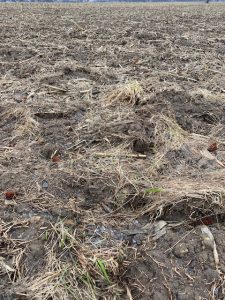
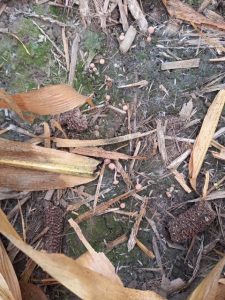
After harvesting wheat or soybeans, the remains shall be shredded and spread evenly throughout the territory.
Vertical tillage (disking) is carried out, when by means of vibration of spring racks of the unit which crushes soil on the depth of 10 cm, microcracks through which moisture and air get to the earth remain.
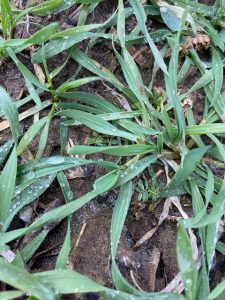
In autumn, green manures (oats, vetch, winter rye, etc.) are grown in a strip method and grow until spring.
In the spring, green manures are treated with a herbicide (such as Roundup), after which they rot, increasing the amount of organic matter in the soil. To understand: 1 ton of organic matter gives the soil 2-3 tons of water.
Corn seeds are sown to a depth of 4-5 cm simultaneously with the introduction of the line of biological products Effect A and Effect B.
After harvesting corn, the active substances remain in the soil, as a result of which it is possible to sow corn again next year using the same technology, which gives an additional 10 c / 1 HA.
Strip loosening is perfect for most regions of the Central regions of Ukraine.
The proposed technology was tested during 2019-2021 by Zlagoda LLC (Rivne region), where corn yields of 110-130 c / ha were obtained. At the same time, corn on corn gave +10 c / ha due to the residual active substance.



