History of septic systems
26.10.2021Problems with the latrine and its maintenance
27.10.2021
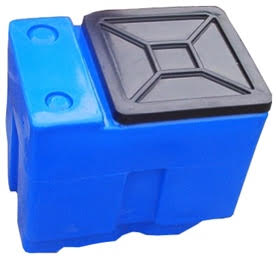
So fat catchers, let’s summarize what and when they are used? A grease trap or grease trap, grease trap, grease separator, grease separator – a tank for wastewater treatment from fats and suspended solids.
Why do you need to “catch” fat?
Grease and oil settle on the pipes, reducing their service life and causing clogging. Getting fat into the soil harms the environment. Fat complicates the operation of the biological wastewater treatment plant.
How do grease traps work?
The device works on the principle of natural separation, ie due to the property of fats to float to the water surface. To allow the drains to slow down and the fat to separate, the sealed container is divided into chambers. Some models come with an extra capacity to collect fat and solid sludge and automatically remove accumulated fat.
How to dispose of fats?
The accumulated fat is collected in a special container and handed over to companies that have a license to dispose of such waste. You can also sign a contract with them for regular maintenance.
What happens in an autonomous sewer without a grease trap?
Fat gradually accumulates in the septic tank on the surface of the effluent. In the mass begins the oxidation process with the release of caustic acids. This leads to a lack of oxygen in the station and the appearance of an unpleasant odor. Without oxygen, bacteria begin to die, and the quality of wastewater treatment is significantly reduced.
What fat traps do you need?
Grease traps are for industrial and domestic use. In private homes, compact containers are installed under the sink. Manufacturers offer a large selection of household grease traps of any volume, configuration, and from different materials.
household;
industrial.
Household grease traps are designed for installation in apartments of residential buildings, in the kitchen under the sink. Such installations are designed for small volumes and have low productivity – 0.5; 1.0 and 1.5 m3 / h. Grease traps for the sink are compact, easy to install and use.
Industrial grease traps are manufactured for use in large enterprises, hotels, restaurants and have increased productivity – from 2m3 / h. They are large and require a separate room for installation. And also for their service and installation more expenses of time and work are required.
There are two types of industrial grease traps:
terrestrial;
underground.
Underground grease traps are often installed vertically underground, and only the inspection hatch for maintenance goes outside.
Ground grease traps are installed in special technical rooms or basements. This takes into account the ease of access to the well for its maintenance and cleaning.
Depending on the type of grease trap, the requirements for their installation and use are more or less different. For example, one of the general requirements is the tightness of the device to avoid the penetration of odors and harmful substances into the environment. There should also be free access to the grease trap cover for maintenance.
Household grease traps due to their reduced performance require more frequent cleaning of grease and replacement of filters. Therefore it is necessary to clean them in time. Also, make sure that the water temperature in the grease trap does not exceed the allowable.
Industrial grease traps do not require frequent maintenance. Clean them at least once every 6 months. The main rule when installing an underground grease trap – is to create conditions in which flooding by groundwater is excluded. If the grease trap is mounted under or near the carriageway, additional protection of the device with reinforced concrete is required.
Today, there are many companies that produce grease traps that work on the same principle. This principle is based on the difference in the density of substances. When wastewater enters the fat trap tanks filled with water, it breaks down into components: solid particles settle down and fats float up. The question is how to choose the right grease trap for a company to make it easy to install, maintain and operate in general. Domestic manufacturers offer us relatively inexpensive installations in contrast to well-established foreign manufacturers, who are more serious about such issues. But it should be borne in mind that the maintenance of foreign manufacturers can be much more expensive financially, and not everywhere there is service equipment for melon foreign companies. Also, when purchasing the installation, you should pay attention to additional devices that facilitate the use of the grease trap, for example, the presence of a contamination sensor will greatly facilitate control over the device.
If it so happens that your sewer is clogged, we recommend using our products from Biochim-Service: